The collaboration is formalised through a Third Party Agreement that is fully aligned with ESA’s Strategy 2040 to elevate the future of Europe. It directly supports the strategy’s goals on autonomy & resilience, growth & competitiveness and inspiration & unity. The ground-based Einstein Telescope, together with space-based LISA, secures Europe’s leadership in gravitational wave science while driving technological, scientific, societal, and economic benefits.
The collaboration will focus on defining, updating and comparing methodologies to estimate costs. Elisabetta Lamboglia, appointed ESA senior technical cost advisor to ETO, will work together with ETO’s Project Office, led by Alessandro Variola, and ETO’s associate director Daniela Trani.
While the Third Party Agreement was signed in January 2026, a meeting at ESTEC in Noordwijk on 24 March 2026 marked the start of the strategic collaboration. In this joint interview, Elisabetta, Alessandro and Daniela reflect on the new collaboration, expectations and what it means for the Einstein Telescope and ESA.
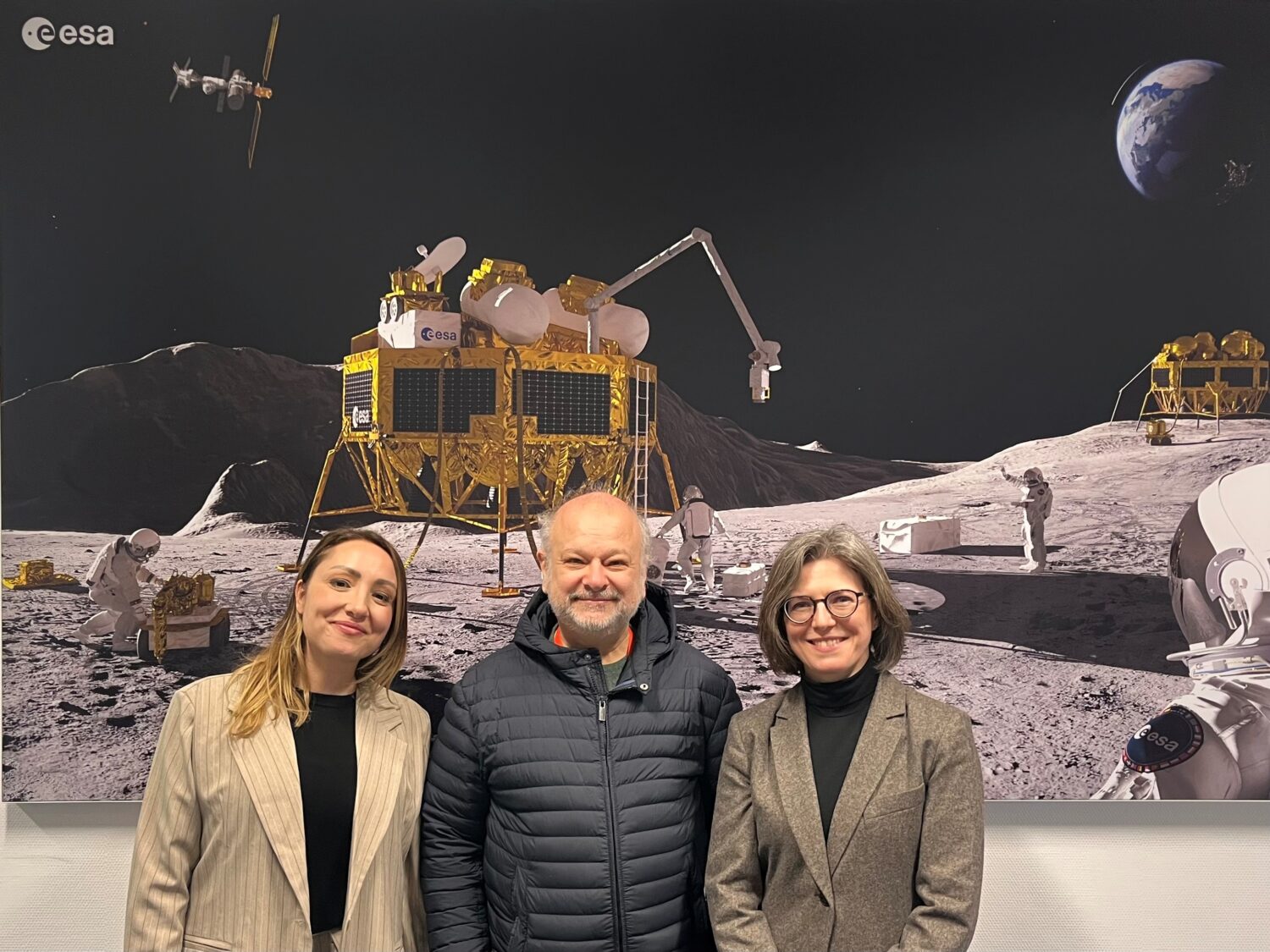 From left to right: Elisabetta Lamboglia, Alessandro Variola and Daniela Trani
Daniela, you were one of the main initiators of this collaboration. When did the idea first emerge?
Daniela: “The idea first came up in September 2024. But it was not until May 2025 that we started contacting ESA about a possible collaboration. We got in touch with Michel van Pelt, ESA’s head of the cost engineering section, and had our first online meeting by mid-June 2025.
For me, reaching out to ESA was a no-brainer. It also was the right moment. LISA was just entering the construction phase, and LISA and the Einstein Telescope together put Europe at the forefront of multimessenger astronomy. The idea was also connected to what’s happening in the United States. Europe has to be more independent, and that makes it interesting to team up and make Europe stronger together.”
And then Elisabetta came in the picture. Elisabetta, when did you hear about the Einstein Telescope for the first time?
Elisabetta: “I first heard about the Einstein Telescope in June 2025, when the Einstein Telescope Organisation (ETO) approached ESA Cost Engineering. ETO wanted to explore the possibility of receiving senior support for the ET costing activities during the ongoing Project Preparation Phase and the upcoming Procurement Phase.
What fascinates me in general about the Einstein Telescope, or ET, is its ability to open an entirely new observational window on the Universe. As a third‑generation gravitational wave observatory, ET will achieve unprecedented sensitivity, allowing us to detect signals from the earliest cosmic epochs, explore phenomena that were previously inaccessible. This capability will allow a better understanding of Einstein’s general relativity, enabling us to test his predictions in extreme conditions and potentially uncover new physics beyond our current models.”
ESA is the European Gateway to Space, across many Programmes and Missions, such as for example Science, Robotic Exploration, or Earth Observation. The Einstein Telescope is a future underground gravitational wave detector. Why is it interesting for ESA to be involved in the Einstein Telescope?
Elisabetta: “ESA’s involvement comes as a logical step, because gravitational wave science is inherently multiplatform: space‑based LISA and ground‑based ET are complementary and together secure Europe’s leadership in this field. ET also drives advanced technologies, fosters European industrial capability, and aligns with ESA’s strategic objectives on autonomy, competitiveness, and scientific excellence.”
The collaboration focuses on cost estimation, a task led by ETO’s project office. Alessandro, why is costing important for the Einstein Telescope?
Alessandro: “That starts with the project management basics. Ideally, whatever project you have, will be based on the project management triangle of scope, schedule and budget. These three corners have to be in balance. That is the starting point. The scope has to be satisfactory for stakeholders, and schedule and budget have to be respected. All things related to the budget have to be built around a cost estimation.
For the Einstein Telescope, the scope has been well defined. But a trade-off analysis, that also takes budget and schedule into account, has not been done yet. Rough estimates exist for the budget, but not more precise ones. Of course there are constraints for the scope, because countries will not give infinite budget and we don’t have an infinite schedule. That’s why we have to make this trade-off analysis, and it is very important to have a more detailed cost estimate as the first step.”
And what does the work on costing include in this phase of the project?
Alessandro: “Cost estimation is a continuous process, that has to be redone in every phase as the design and the project mature. In the first phase, the budget is quite general and not very precise. As the project progresses and the design reaches a higher level of maturity with more detail, you redo the exercise and get a better idea.
We use different methodologies for different objects, depending on the maturity of the design of these objects. Take the towers, for example: we know the towers that have been built for Virgo, and we know the kind of towers we want for the Einstein Telescope. Based on that, we will do an expert analysis and will come to an estimate. This is called analogy.
For the vacuum pipe we can make a much more accurate estimation, because we have the prototype vacuum pipe at CERN. In this case we can use a more specific bottom-up methodology, which gives a more accurate estimate.
At this stage, the exercise will be based on objects and not complete. Estimates for integration costs or people for example, can only be done at a later stage.”
In the Einstein Telescope project, estimating costs lies within the mandate of the Einstein Telescope Organisation (ETO). What kind of organisation is ETO?
Daniela: “To be very short: it’s the professional organisation to get the Einstein Telescope approved and built. ETO* is and international inter-institutional initiative currently consisting of ~40 professionals with backgrounds in (project) management, strategy, finance, (civil) engineering and communication. We may not be very big, but are growing and very driven to pull everything together. Through ETO, research institutes, universities and national agencies are providing capacity and funds to lay the foundation for an organisation that will later do the management, construction and exploitation of the Einstein Telescope. It’s not a legal entity yet, but it will become or lead to one in the future.”
And what is Elisabetta’s role in relation to ETO’s project office?
Alessandro: “Elisabetta is a senior engineer with a lot of experience and knowledge about different methodologies and how to apply them. She acts as advisor for the ETO directorate and advises me. Her work at this moment is connected to the work on the Geometry Comparison Report we have just started up. She has already suggested important adaptations to certain methodologies for ETO. And she will advise us on correlations between costing and other topics like risk or governance models. She will not apply the methodologies herself, that remains the responsibility of ETO.”
Technically, the collaboration already started earlier this year. How is it going?
Alessandro: “The collaboration with ESA is going very well. Elisabetta really understands the situation and our challenges. She is a professional and can use sophisticated tools. We meet online every week, and she participates in the cost meetings and gives input on how to start activities. By now, she is very well involved. My only ‘complaint’ is that I wish we had even more of her time.”
Elisabetta, how is your role at ESA connected to your role for ETO?
Elisabetta: “I am a system engineer with a PhD in space systems applications, complemented by experience in international relations, strategy, and stakeholder management. At ESA, I lead activities in systems applications and cost engineering. This includes the development of cost methodologies that ensure robust, transparent, and data‑driven decision‑making for multi‑complex programmes and their associated budgets. My responsibilities span chairing or contributing to large‑scope procurement boards, serving as technical manager for applications, managing diverse internal and external stakeholders, and leading activities under the Future Engineering and Industrialisation Centre of Competence. This expertise directly supports my role for ETO, where I help establish solid cost frameworks, methodologies, and strategic governance structures essential for a large, distributed, cutting‑edge research infrastructure like the Einstein Telescope.”
You have a lot of experience with cost engineering and methodologies. If you could pick one thing, what would be the most valuable contribution you will bring to the Einstein Telescope?
Elisabetta: “My most valuable contribution is advising on the establishment of systemic, transparent, and harmonised cost‑engineering frameworks (scope, perimeter, assumptions) together with the multi-stakeholders contributions. This enables reliable cost estimates in line with the maturity of the design, informed decision‑making, and long‑term programme sustainability—crucial for a project of ET’s scale and complexity.”
Is there anything you hope to gain or learn from the Einstein Telescope and the Einstein Telescope Organisation?
Elisabetta: “I look forward to deepening my experience with large‑scale research infrastructures, learning from a diverse scientific and technical community, and contributing to a project that will shape Europe’s scientific landscape for decades.”
Looking at the bigger picture, why is it useful for the Einstein Telescope that ETO cooperates with an organisation like ESA?
Daniela: “There are multiple advantages. Of course there are technical ones: the expertise, knowledge and experience that ESA bring are impressive and extremely useful. In this way, we don’t have to reinvent the wheel when it comes to cost estimation.
But ESA’s reputation also provides a quality stamp on the work we do together with them. ESA is a European global leader in big science.”
Does ETO also have other collaborations?
Daniela: “Yes, we have also been collaborating with CERN for several years now. The focus of that collaboration is more on aspects like (civil) engineering, materials, vacuum and safety. With ESA and CERN, two of the biggest scientific organisations in Europe and the most global ones are interested in being involved in the Einstein Telescope. This demonstrates that the Einstein Telescope is a promising project. It is also a form of external recognition for this future strategic infrastructure, showing that it’s not just something we feel internally.
These collaborations are also a means to jointly strengthen Europe’s role as a global leader in research and innovation, be an example for how to enlarge the pool of talents through collaboration, and build knowledge that can be useful in the future for other research infrastructures.
Of course the trust and commitment from ESA and CERN also come with a responsibility, to use this opportunity in the best possible way for ET, for their organisations and for society.”
*The Einstein Telescope Organisation (ETO) is the professional organisation that works on the structure, coordination and enabling systems to make the Einstein Telescope feasible, fundable and buildable. ETO acts as a central hub, coordinating between different entities including the scientific Einstein Telescope Collaboration and the candidate host consortia. ETO is an international inter-institutional initiative, with a funders group consisting of Nikhef, INFN, FWO, BELSPO and IFAE. Additional and in-kind personnel contributions come from Italy, the Netherlands, Belgium, France, Germany, Poland and Spain. The countries represented in the Einstein Telescope’s Board of Governmental Representatives (BGR) have demonstrated strong commitment to ETO.
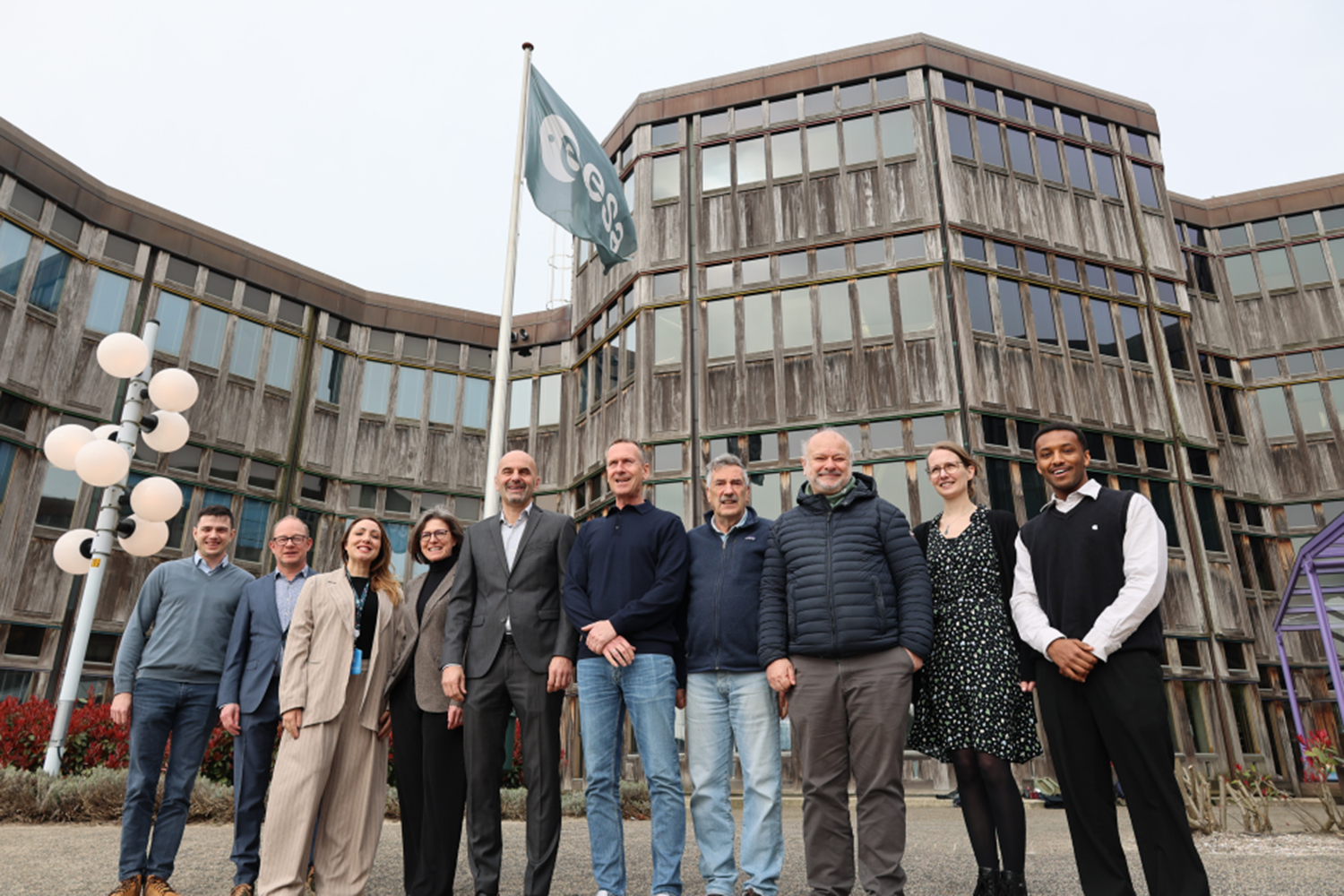
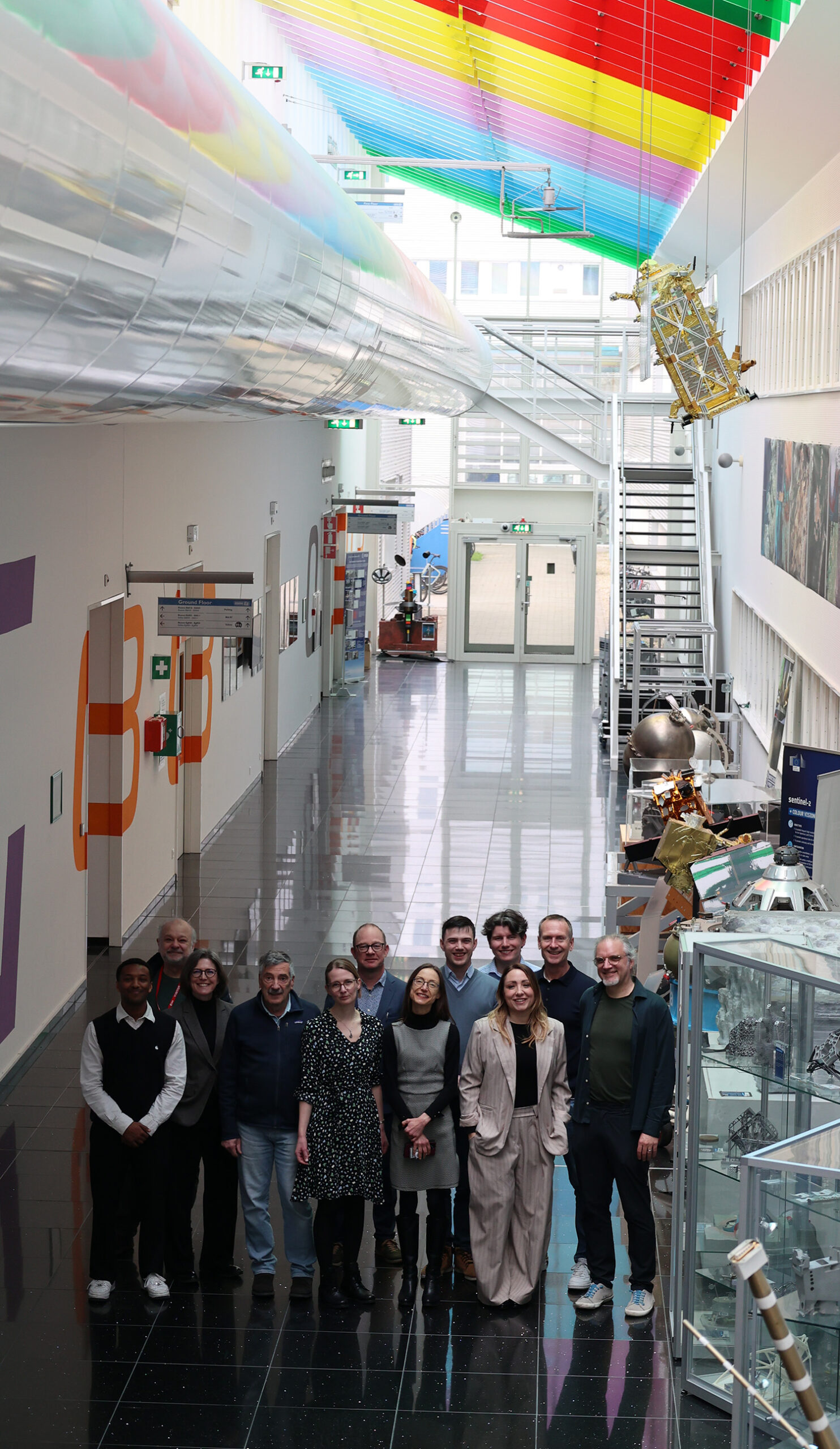
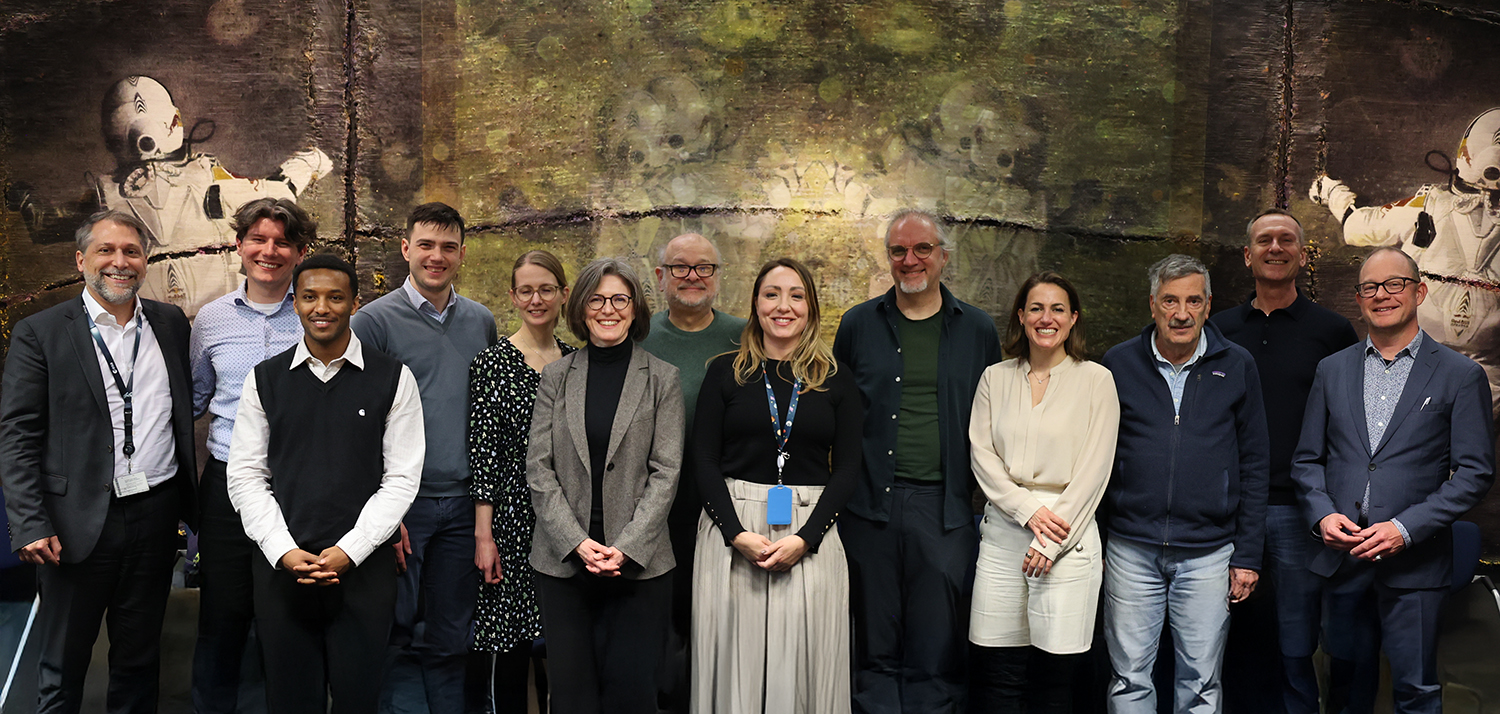
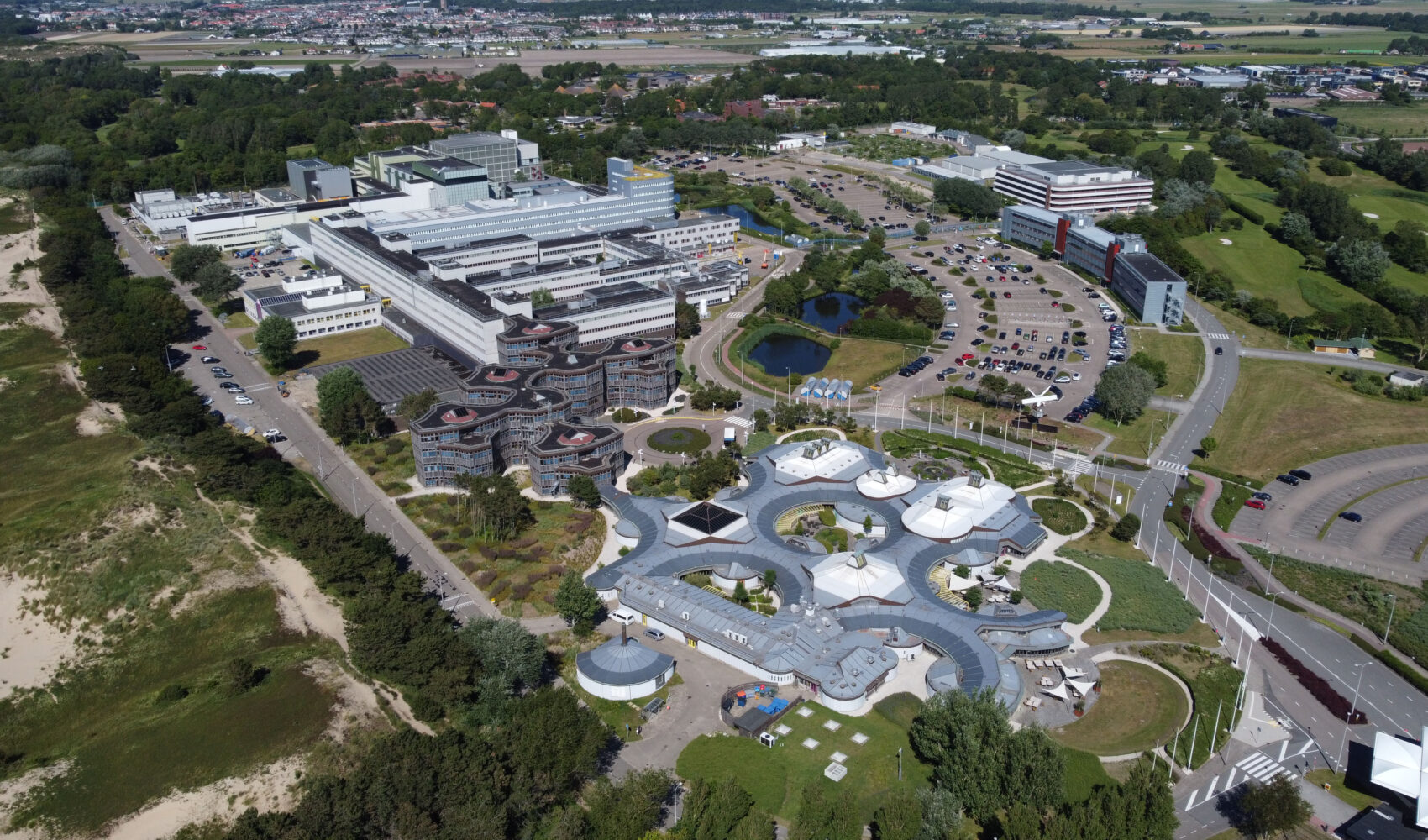
Credits photos: Cover photo Duneside view of ESA’s technical heart: ESA-Barretta; Group photos strategic kick-off meeting 24 March: ESA – R. Moorkens O’Reilly