
Einstein Telescope Technologies
Laser interferometry is based on laser beams traveling through long vacuum tubes in different directions, bouncing back and forth until they recombine and produce an interference pattern on an output screen. This method, the same as used for present gravitational wave detectors, will allow it to measure the infinitesimal variations — less than a billionth of a billionth of a metre — in the distances travelled by light inside the vacuum tubes as gravitational waves pass by. As a result, it will be able to observe massive objects like merging black holes millions or even billions of light-years from Earth.
The Einstein Telescope will push the boundaries of this technique to a new level, not only because of its size and underground location, but also because of the extraordinary technological innovations related to the many aspects of its operation. This will significantly increase the sensitivity and scientific reach of its detections, compared to present gravitational wave detectors. Below are the main areas in which researchers are working to overcome the limits of existing technology.
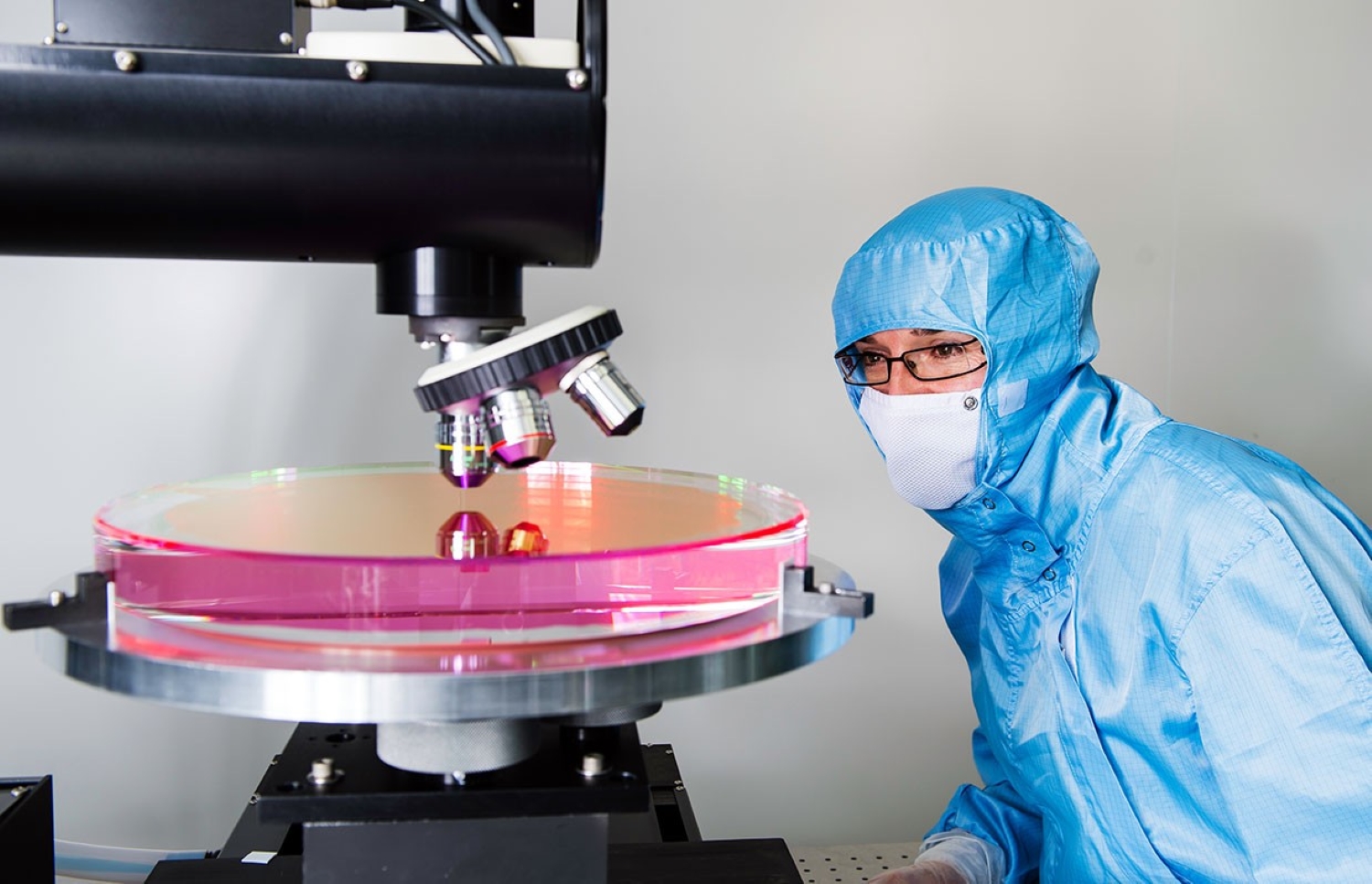 A mirror of the Virgo gravitational wave detector being checked with an optical profilometer, to look for defects and make accurate measurements on its characteristics. Credits: Cyril FRESILLON / Virgo / CNRS Images
Anything in the external environment can interfere with the detection of gravitational wave signals. To isolate the experiment as much as possible, a large ultra-high vacuum system will be needed, as well as seismic motion attenuators for the core optics, mode cleaners, benches and mirrors. In addition, inertial sensors will measure the Earth’s vibrations so that they can be digitally subtracted from the readouts.
The Einstein Telescope will be a huge Ultra High Vacuum system (with a working pressure around 10^–10 mbar) with about 130 km of 1-metre diameter pipes, ensuring undisturbed laser beams between mirrors suspended to isolate them from environmental motion and housed in 10-20 metre high, 3-5 m diameter towers. Industries specialising in vacuum technology, such as those involved in accelerator or space applications, could provide innovative solutions.
The Einstein Telescope will rely on the precise measurement of relative length differences in kilometre-scale arms of a laser interferometer. Key optical components include super-polished mirrors with ultra-high reflectivity coatings, ultra-stable lasers producing monochromatic beams, and additional systems for instrument control and stabilisation. Gravitational wave detection depends on tiny ‘flickers’ in the photodetector output. Thus the instrument requires low round-trip losses of less than 50 ppm to achieve several hundred kW of laser power, while keeping the wavefront distortions from thermal effect minimal, low amplitude and phase noise with stable pointing accuracy. Improving the quality of the mirror substrate, polishing and coatings to reduce optical losses, is an area where academic and industrial expertise in advanced materials and precision manufacturing is critical.
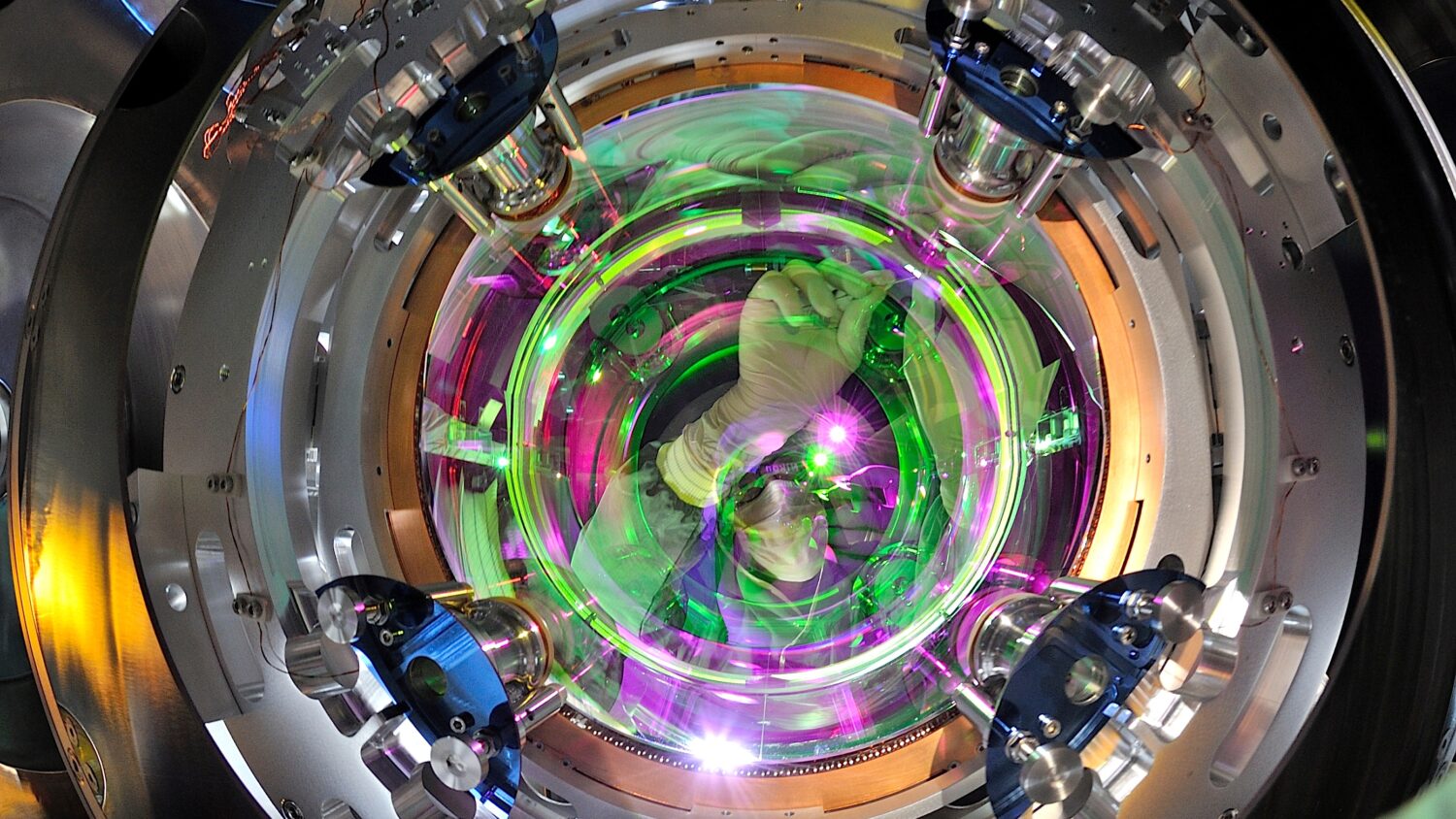 Researcher working on one of the mirrors of the Virgo gravitational wave detector. Credits: Maurizio Perceiballi/EGO-Virgo
The Einstein Telescope requires extremely precise lasers. Commercially available lasers need to be improved to achieve the linewidths and stabilities sufficient for the Einstein Telescope. Additionally, the implementation of novel quantum technologies, such as squeezed light sources, could be enhanced through collaboration with the photonics industry.
The Einstein Telescope requires advanced control systems to reduce motion in hundreds of coupled degrees of freedom to ensure the interferometer performs optimally. Current interferometers are limited by control generated noise at low frequencies. A new control paradigm that will also include AI methods will be developed to overcome current limitations.
Advances in numerical modelling software and virtual/augmented reality have revolutionised the calculation and visualisation of processes such as ground motion, which are difficult to observe due to their interaction with infrastructure. The growth of Building Information Modelling (BIM) in civil engineering has improved monitoring during construction, safety inspections and real-time updates on the impact of unforeseen events on the project.
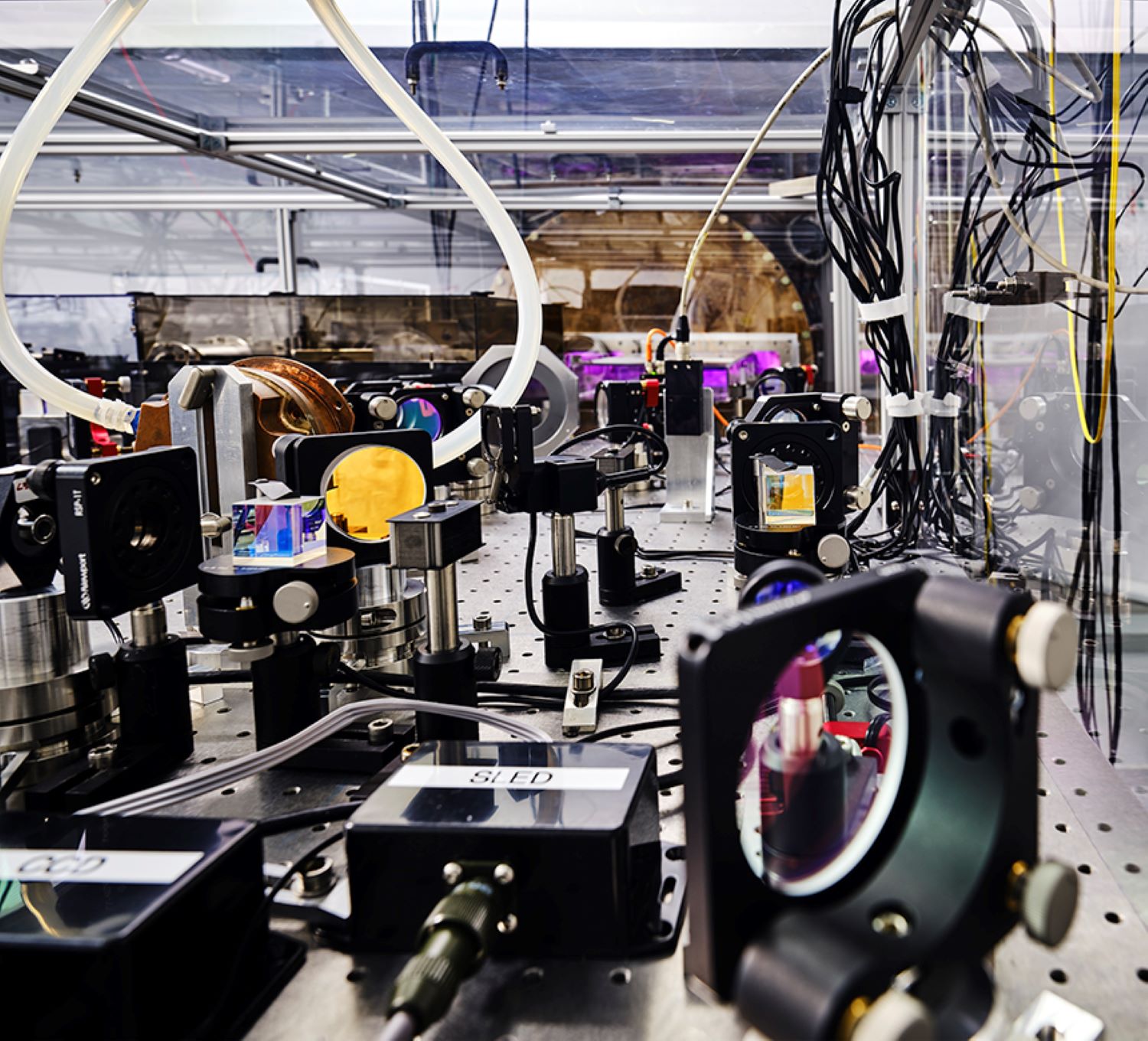 One of Virgo’s optical benches. Credits: EGO/Virgo
The Einstein Telescope will have several core optics operating at a temperature of 10 K (-263 C). The 200 kg mass mirrors are suspended by very thin wires. After initial cooling, the operating temperature of the mirrors must be maintained solely by radiation and conduction through very low stiffness heat links to ensure that the telescope’s performance is not affected by vibrations from the cryogenic facility. In this scenario, companies involved in cryogenics and advanced cooling technologies could help develop ultra-low noise cryocoolers and active vibration isolators compatible with the low temperature UHV environment.
The vast amounts of data generated by the Einstein Telescope will require sophisticated data processing and storage solutions. Collaboration with tech companies specialising in big data, cloud computing, and AI could lead to more efficient data management and analysis tools.
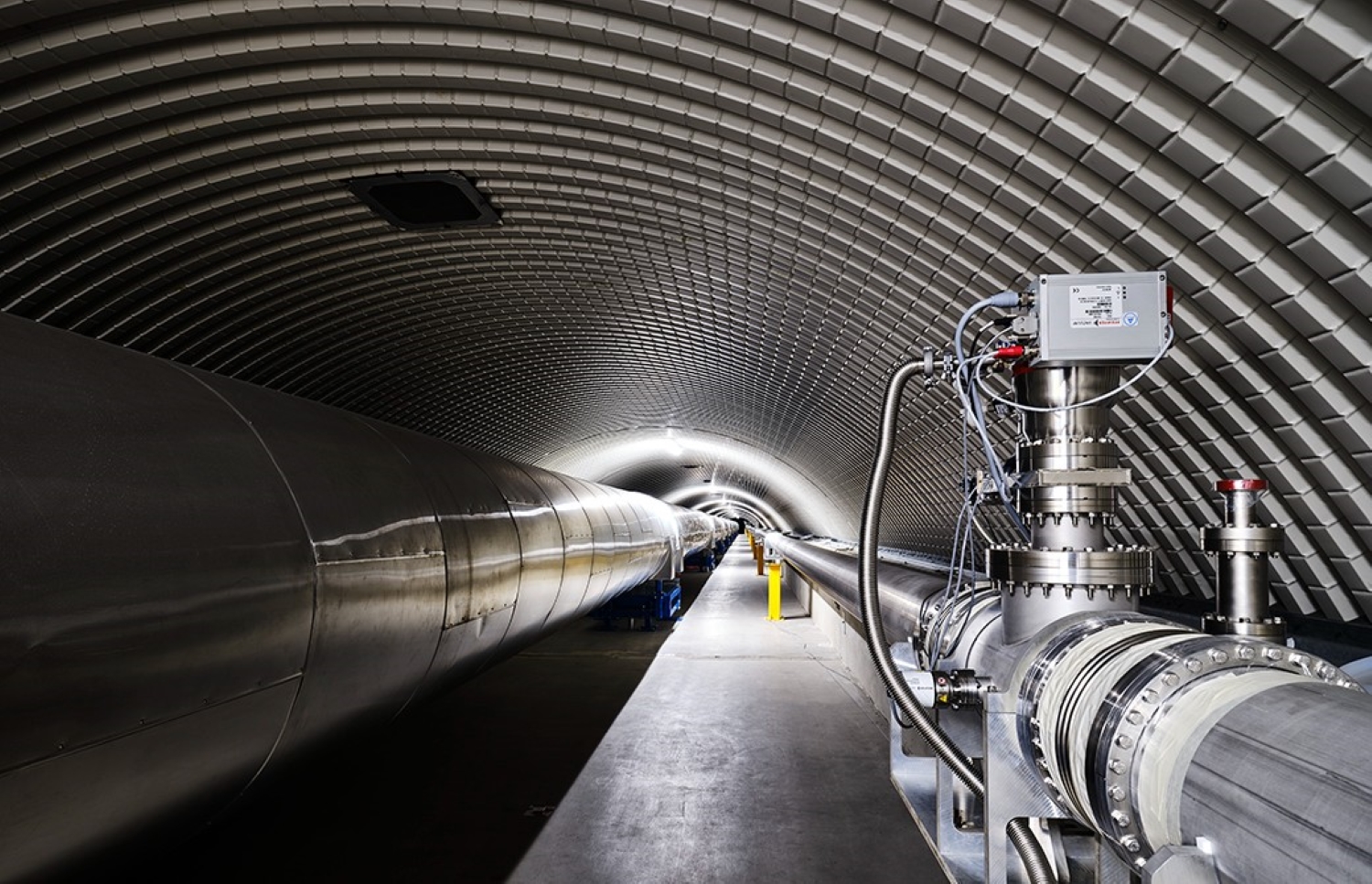 Inside one of the Virgo tunnels the squeezing pipe (right) runs parallel to the main one (left). Credits: Enrico Sacchetti