
Sustainability
The Einstein Telescope is a large European research project to expand our knowledge of the Universe by capturing gravitational wave signals from an underground laboratory. This ambitious scientific goal cannot be reached without keeping the following aspects at the heart of the project: safety, ethics, sustainability, preservation of the natural landscape and minimization of the impact on the environment . These principles will guide the approach for the Einstein Telescope.
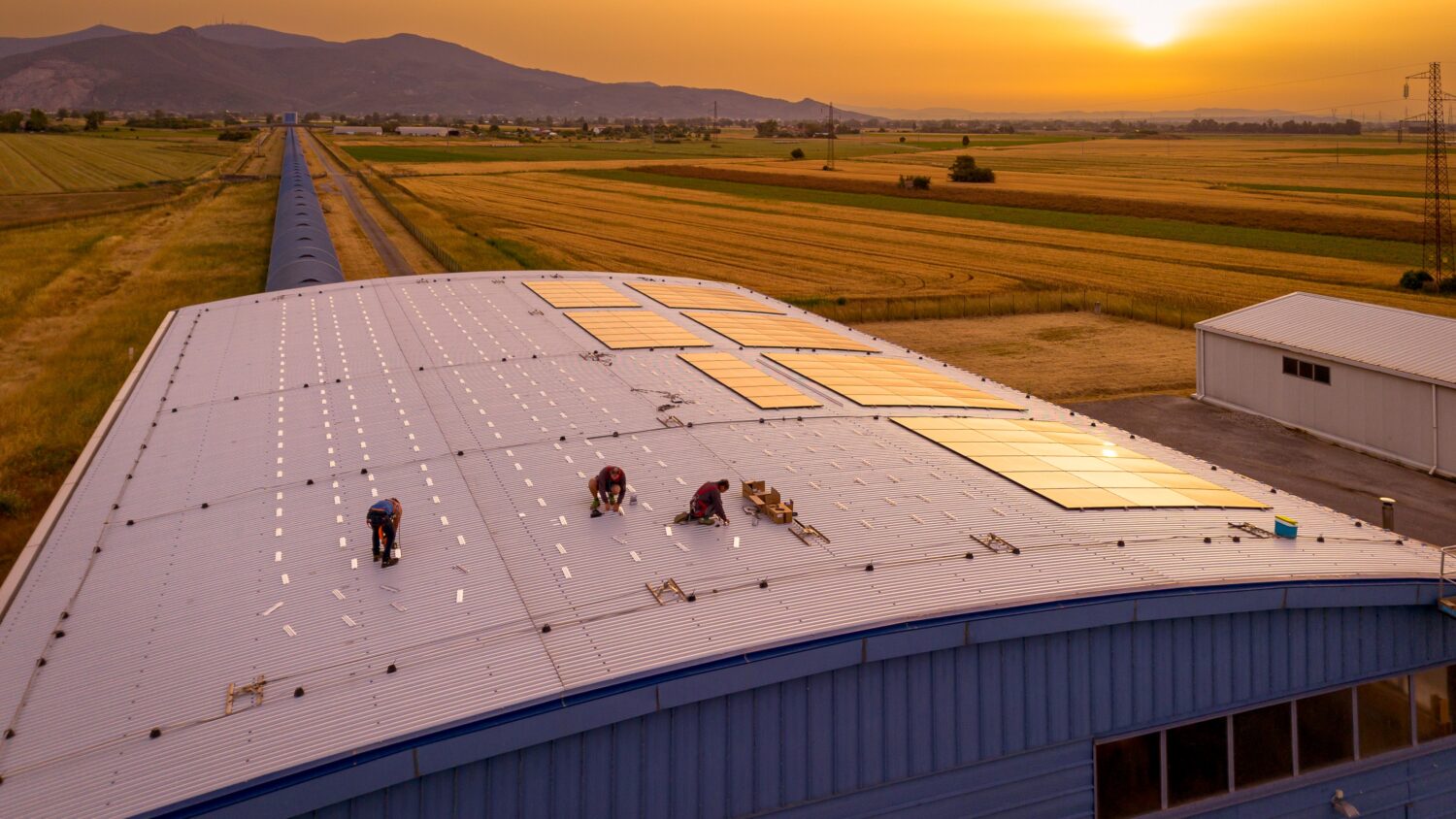 Solar panels being installed on top of one of the buildings of the Virgo detector. Credits: Massimo D’Andrea/EGO-Virgo
There are several fundamental indicators that need to be monitored in order to minimise the project’s impact on the environment, especially in view of the rising concern regarding climate change. These indicators include energy consumption, land use and carbon footprint, an index measuring the total amount of greenhouse gasses that an activity adds to the atmosphere. Land use index is also a particularly relevant and multifaceted aspect to be considered, as it can simulate the impact of the Einstein Telescope on the landscape where it will be built.
While the Einstein Telescope is in definition, it’s important to go through the highly complex design phase with these core principles in mind. This means for example favouring renewable energy sources and the most efficient technologies for all key energy-consuming activities of the Einstein Telescope, from travel to computing. It also means planning sustainable practices, especially in the construction phase. This requires proper selection of materials for constructions and defining an overall strategy for reclamation, reusing and recycling of the excavated materials to be extracted with as little anthropogenic pollution as possible
Finally we have to keep in mind the environmental impact of travelling, which is an important component of the work of such a large international collaboration, but can be managed wisely and limited through the use of digital web-based working tools.
All of these aspects are defined in the Sustainable Development Implementation Strategy, which is being developed within the Einstein Telescope project.