The task of coordinating the Geometry Comparison Report as it is called, lies with the Einstein Telescope Organisation (ETO) after a request by the Einstein Telescope Board of Governmental Representatives (BGR). However, it is clear that knowledge, expertise and involvement from throughout the community are essential. That is why the scientific Einstein Telescope Collaboration and the candidate host consortia of Sardinia, the Euregio Meuse-Rhine and Lusatia are involved. The quality of the report depends strongly on the input and effort of all involved parties.
Alessandro Variola, head of the ETO Project Office, will coordinate the work on the Geometry Comparison Report (GCR). He explains how the work is structured: “We will compare the different geometries by looking at five different aspects: the scientific added value, risk, costing, governance and socio-economic impact. Each topic will be dealt with by a separate group and, depending on the topic, different experts will be involved.
The work is organised as a short-term project. The five topics to be studied will be described in separate reports, which will fall under the organisational responsibility of five work packages. The work packages are broken down into defined tasks. To support the project structure, liaisons ensure recursive communication between the GCR project and stakeholders. It is crucial to highlight that the project structure provided by ETO will enable the development of a cross-organisational working environment—desirable and necessary for ET—where diverse expertise is present in different contexts.”
ETO’s associate director Daniela Trani, clarifies how the work on this report relates to other Einstein Telescope activities. “The aim of this document will be to support decision-making by the BGR and national ministries and agencies. ETO has been given the mandate to coordinate the execution of such activities. Through the Geometry Comparison Report we will not advise on “which is the best option” but present as much as possible intelligence for the involved countries to make the necessary decisions.”
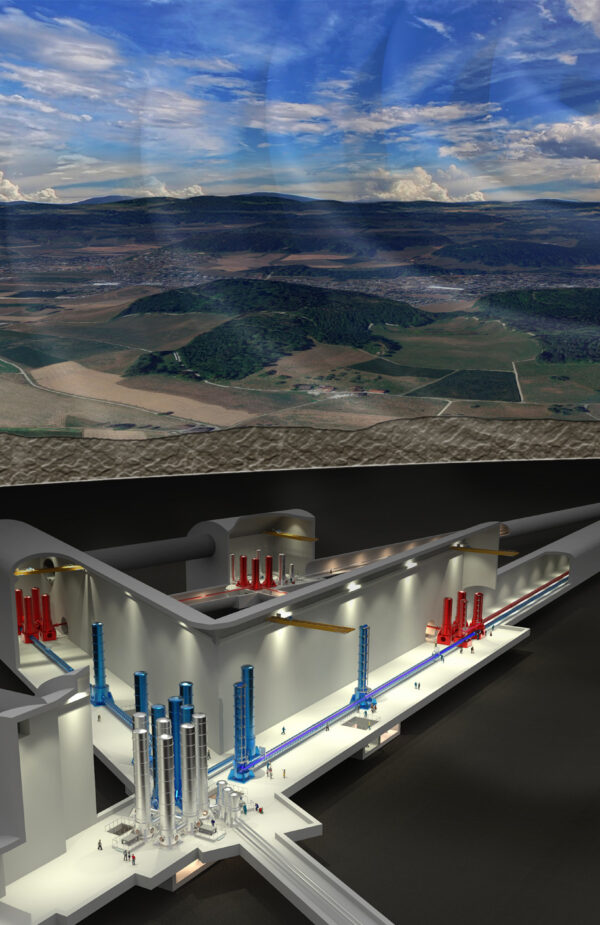
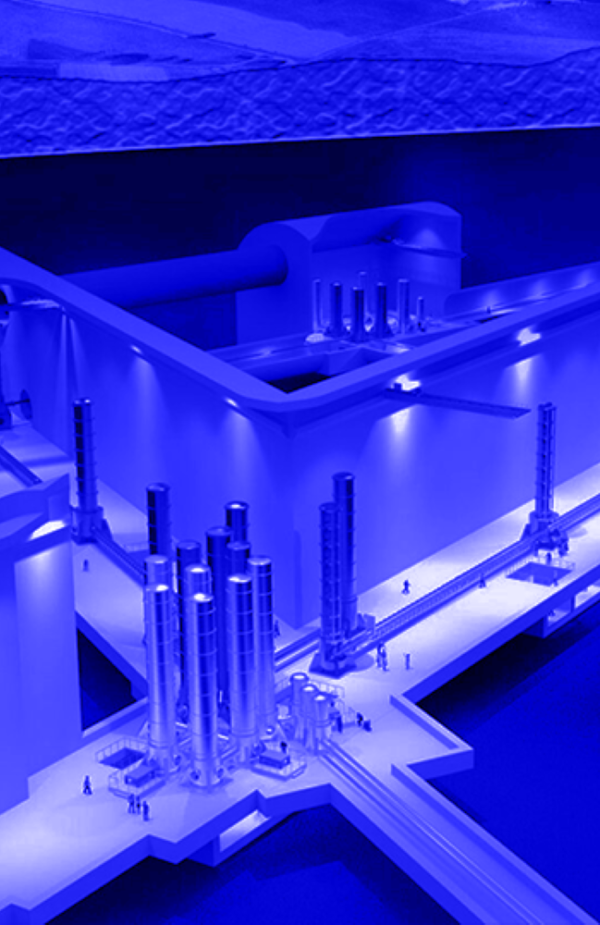
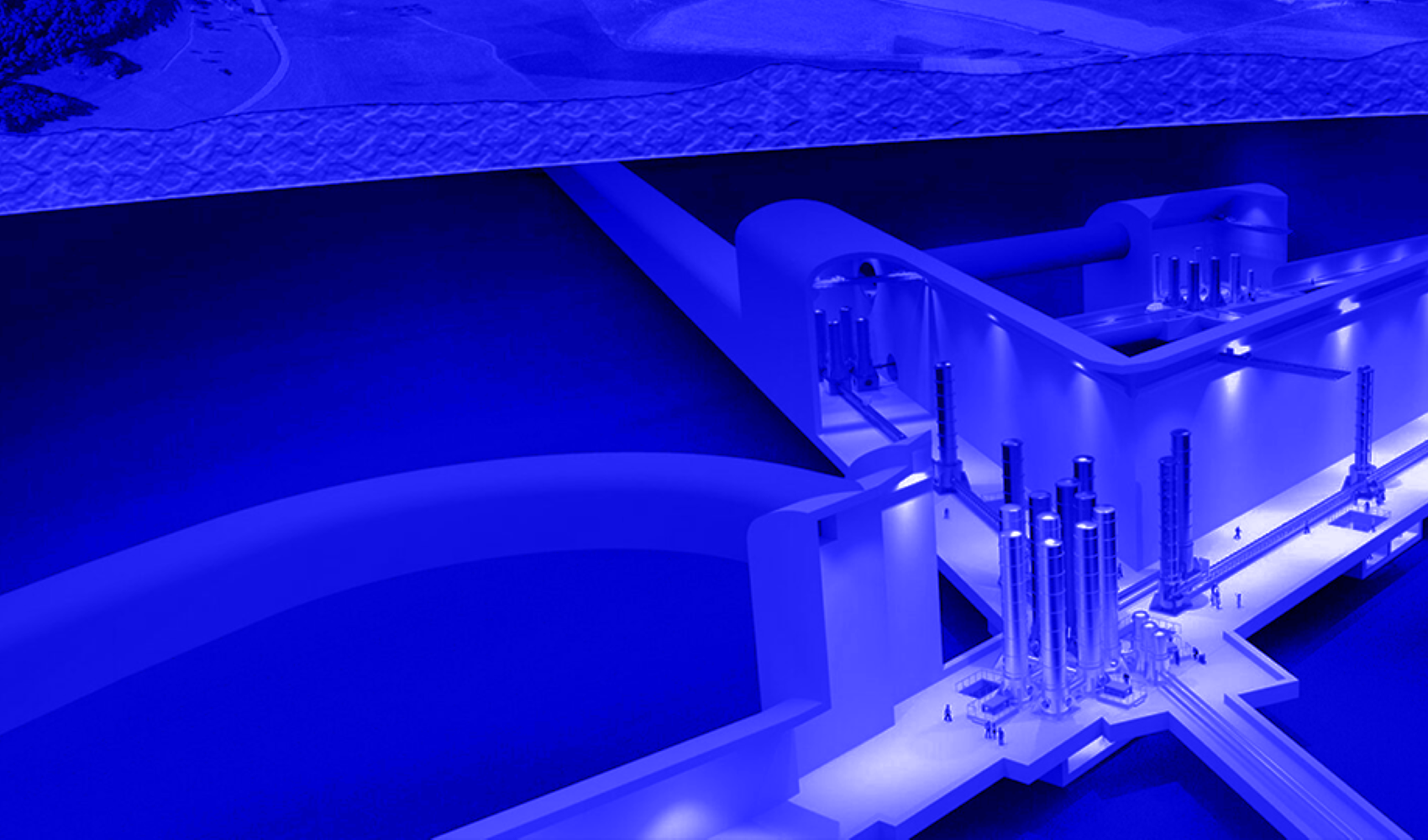
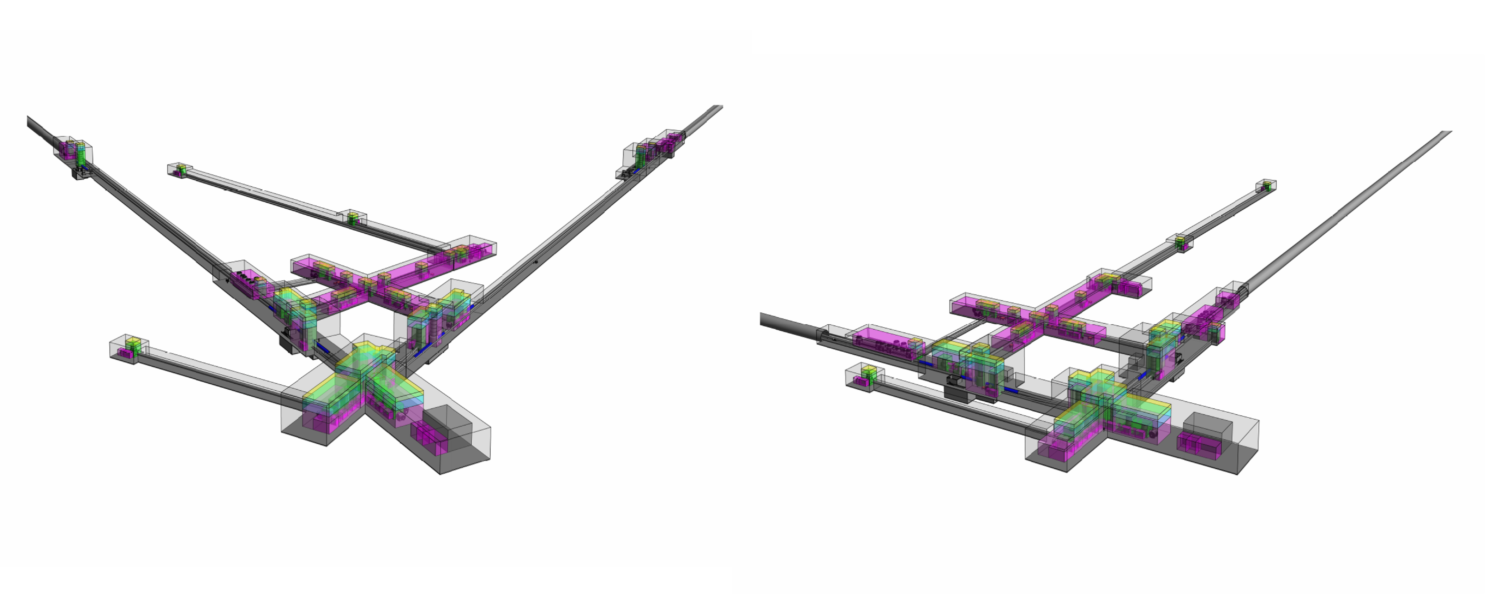 Visualisations of the corners of the baseline designs for the triangle and the L-shaped geometry.
When it comes to the geometry of the Einstein Telescope, different preferences exist. At times, that has been a topic of tension in the scientific and wider Einstein Telescope community. Although each stakeholder approaches the work on this report from a different perspective, they mostly support it, while emphasising the need for consistency.
Marica Branchesi is a leading scientist in the Einstein Telescope Collaboration and chair of the Observation Science Board. She explains what she expects of this report: “The added value of this multifaceted report lies in providing a comprehensive and well-founded comparison of the different geometrical configurations. This is essential for making a well-informed decision on the optimal configuration for an observatory that we envision as extraordinary and transformative, capable of revolutionising our understanding of the Universe. As scientists, our primary goal is to maximise the scientific return while carefully assessing the risks associated with key technical aspects. At the same time, we must also take into account factors such as cost, governance, and socio-economic impact to ensure that the final decision is both scientifically robust and strategically sound.”
Christian Stegmann, who leads the activities for the Lusatia candidate site, considers the report to be an important step: “The Geometry Comparison Report is a key step towards a European decision on the Einstein Telescope. By comparing configurations in a consistent way, it establishes a shared European baseline that is as independent of specific sites as possible, while also addressing risks and societal aspects. Our involvement from Lusatia ensures that this process benefits from strong expertise and remains open, transparent, and balanced.”
Giovanni Bisoffi, coordinator of the feasibility studies on Sardinia emphasises the need for consistency and transparency “On cost estimates, it is important to ensure consistency between the work of the GCR, the site selection process, and the candidate host consortia. Some items, especially those related to local infrastructures, remain confidential within the bids, unless differently specified in a framework of reciprocity and transparency. Another relevant aspect is the risk analysis. This should also be investigated within a framework that matches the site selection process. In this competitive context, it is essential that the methodology for risk evaluation is shared.”
Stan Bentvelsen, scientific director of the Euregio Meuse-Rhine project office, supports that this document focuses on multiple angles and also emphasises the importance of alignment : “The Einstein Telescope will be a unique and complex infrastructure that will give the field of gravitational wave research a tremendous boost. It is important to investigate all aspects covered by this report, to de-risk the construction and operation. Just like the teams in Lusatia and on Sardinia, we deal with all aspects that the report will investigate, as we will provide a complete and comprehensive bidbook for ET. In doing so, we like to be in close contact with ETO to align and optimise efficiency.”
It is clear that the upcoming half year will be intensive for everyone involved, as Daniela Trani notes: “Currently, most of ETO staff is contributing to this crucial assignment. We are providing technical and strategic expertise, but also enabling the essential involvement and contribution of the Einstein Telescope Collaboration, candidate host consortia, and our external partners, e.g. CERN and ESA. It is quite the task, but also a unique opportunity for all parties involved to substantially contribute together to the progress and success of the Einstein Telescope as a groundbreaking European research infrastructure.”