The funding comes from a call for proposals targeting ESFRI projects that entered the ESFRI Roadmap in 2021. Submitted projects had to focus on key bottlenecks in the transition from preparatory to implementation phase, for example governance, membership enlargement or addressing staff issues.
ET-COMPASS, short for COordination, Management, Planning And Strategic Support, is meant to support the Einstein Telescope Organisation and the wider Einstein Telescope initiative on the roadmap to readiness. Planned activities include further developing organisational structures and frameworks, costing methodologies and procedures, working on operational capacity of ETO, membership enlargement and partnership engagement.
INFN will coordinate the consortium, which includes nine research institutes from nine countries: INFN (Italy), Nikhef (the Netherlands), KU Leuven (Belgium), Montanuniversität Leoben (Austria), IFAE (Spain), Astrocent (Poland), University of Glasgow (United Kingdom), Deutsches Zentrum für Astrophysik (Germany) and the University of Rijeka (Croatia). All work will be executed by the partners in close collaboration with the Einstein Telescope Organisation (ETO).
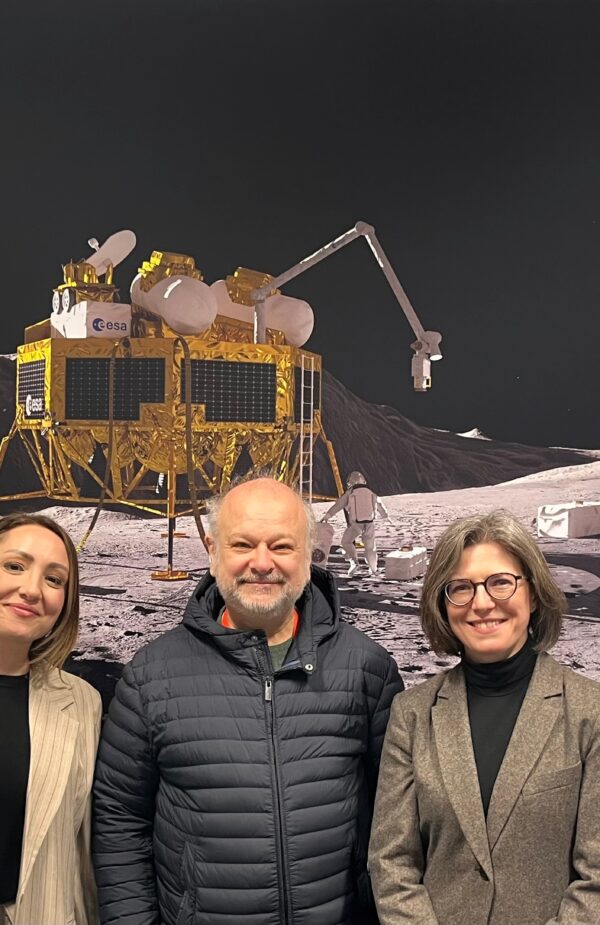
Project coordinator Mauro Morandin is excited about the prospect: “Getting the Einstein Telescope ready for implementation is a complex and challenging endeavour. The project has all the necessary components to deliver several key contributions and act as a catalyst to help further develop the organisation.”
ETO’s associate director Daniela Trani is also looking forward to the prospect of the project: “ET-COMPASS will build on and contribute to work that is already being done by the Einstein Telescope Organisation (ETO), and expand on building blocks provided by the ET-PP project that is running until later this year. I am very confident that ET-COMPASS will provide an important impulse to our effort aimed at establishing a strong organisational and management framework for the Einstein Telescope. ”
The project will start in early 2027 and run for two years. The activities carried out will be complementary to processes foreseen by involved governments for geometry and site selection. Daniela explains: “Regardless of where the Einstein Telescope will be built, you need a central, professional organisation, clear structures and effective processes that allow actors to contribute to its successful implementation. In this respect, all the elements we have tasked ET-COMPASS to provide address key aspects – such as project management, costing methodology and cooperation models that allow as many partners as possible to be directly involved and contribute to this endeavour – just to name a few. The project will deliver such elements exactly at the maturity level and moment they will be needed.”